Method & Evaluation
How Artificial Societies accurately models human opinion
Artificial Societies uses networks of AI personas to simulate high-value audiences, used by Fortune 100 organisations to test how strategies shift opinions that matter. Here’s how AS models human opinion, and how it performs against human panels and simple synthetic personas.
From market intelligence to market simulation.
Each persona is grounded in a real individual, then connected into a realistic network of influence.
The standard approach of creating a synthetic persona is by prompting an LLM with an invented biography (e.g. “you are a 34-year-old teacher from Ohio”), which produces generic, stereotyped answers.
Artificial Societies is different. We employ a unique and proprietary approach, developed over years of research originating from the first large-scale AI society paper. This approach combines real-world intelligence gathering, the mapping of individual belief systems, and a unique network science modelling method.
Data sources
Start from real people.
Published research, online commentary, reviews, anonymised social data, and public records of voting and investment show how people communicate and behave in context.
LinkedIn, X, Reddit, Facebook, YouTube, Instagram, Amazon and more
First-party data (Optional)
Your proprietary data can be layered into the persona set. First-party data is segregated per engagement, held in the EU, and never used for training our models.
Persona construction
Model their belief systems.
Psychometric methods reconstruct how individuals reason, allowing us to predict reactions to new information. Every persona is validated before entering a society.
Social dataPublic recordFirst-party dataValidationSocietyPersonas validated against audience benchmarks and prior behaviour
Society creation
Simulate how opinion moves.
Personas are clustered by shared characteristics and connected through real relationships and patterns of influence. Results can be analysed at market, segment or persona level.
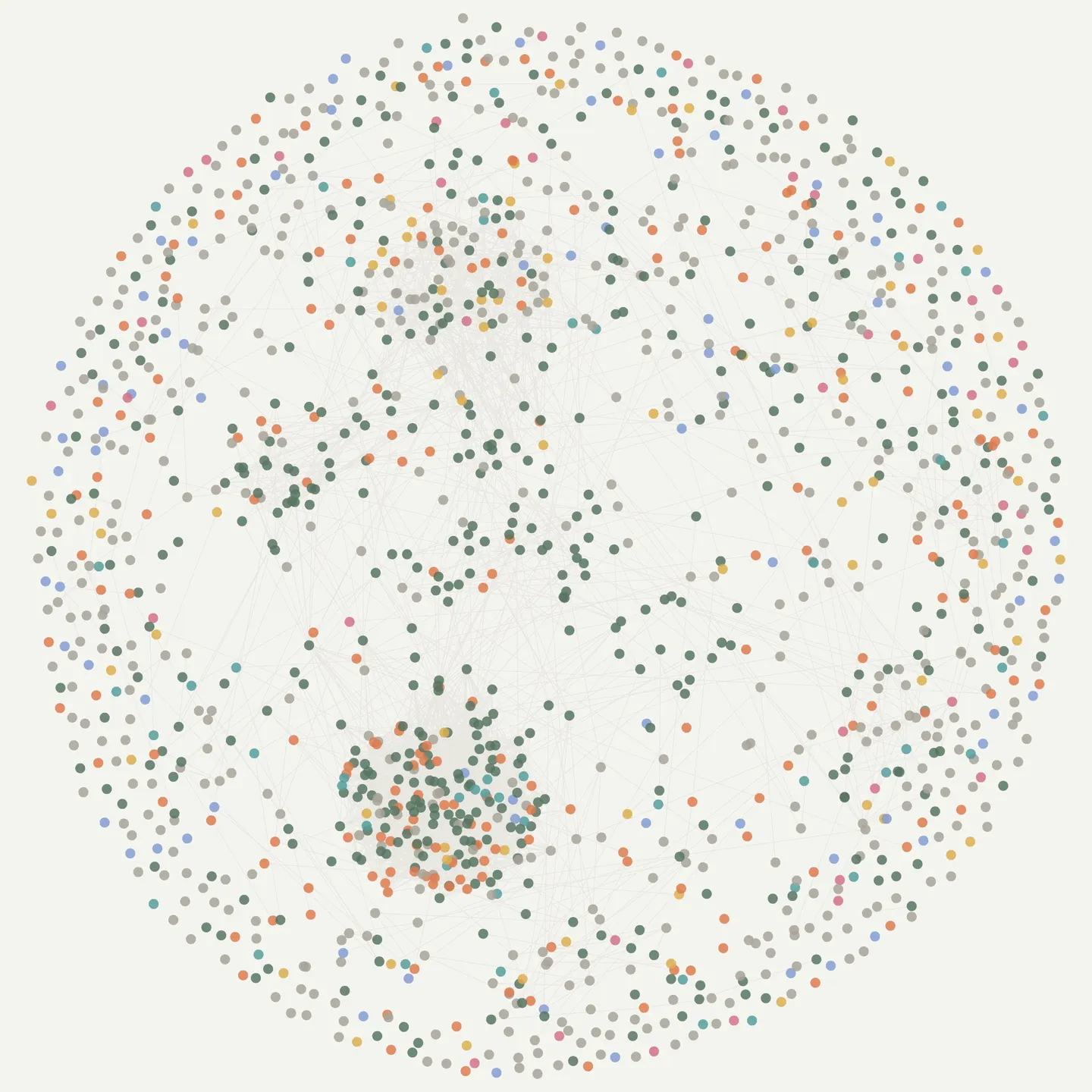
12 to 3,500 personas per society

Achieving individual nuance, at scale.
Artificial Societies combines the population accuracy of synthetic populations with the individual richness of digital twins.
Individual nuance →
Digital twins
one individual
Artificial Societies
networks of personas
Synthetic populations
population averages
Large samples →
Digital twins
one individual at a time
- Strength: Detailed individual nuance with interpretable reasoning
- Limitation: No reliable population-level distributions and difficult to scale
Artificial Societies
networks of enriched personas
- Strength: Accurate population distributions with rich individual nuance
- Strength: Reliable segments and crosstabs across high-value audiences
Synthetic populations
invented population averages
- Strength: Accurate top-line averages
- Limitation: Invented individuals with unreliable segmentation and crosstabs
How it performs
Artificial Societies accurately captures human opinion distributions, and every individual response is interpretable with why they answered as they did.
Example 1 of 4
Is ‘everyone should be treated fairly’ an American value?
Do you agree that everyone should aim to improve themselves?
Is ‘everyone should have an equal say over political decisions’ an American value?
Should everyone stick equally to the rules?
95% distribution accuracy
Human responses
78% agree · 12% disagree · 10% not sure
Artificial Societies
73% agree · 15% disagree · 12% not sure
- Agree
- Disagree
- Not sure
Community Organizer
Director, neighborhood nonprofit
Advocating for underserved families.
Atlanta, United States · Female · Millennial · Director · Nonprofit
ResponseAgree
“Fairness is the one thing this country is supposed to stand for. If we don’t believe that, what are we even doing?”
Hedge Fund Analyst
Analyst, long/short equities
Earning those outcomes.
New York, United States · Male · Gen Z · Mid-level · Finance
ResponseDisagree
“This place rewards the people who show up and work harder than everyone else. That’s the real American value.”
98% distribution accuracy
Human responses
66% agree · 22% disagree · 12% not sure
Artificial Societies
64% agree · 23% disagree · 13% not sure
- Agree
- Disagree
- Not sure
Startup Founder
Founder & CEO, seed-stage SaaS
Building a company from scratch.
Austin, United States · Female · Millennial · C-Suite · Technology
ResponseAgree
“My whole job is about improving myself. The day I stop pushing is the day I start falling behind. I expect it of myself and everyone on my team.”
Palliative Care Nurse
Senior Nurse, hospice ward
Loving mum of 3, two decades at the bedside.
Manchester, United Kingdom · Female · Gen X · Senior · Healthcare
ResponseDisagree
“This idea that everyone must always be ‘improving’, it’s such a trap. Sometimes the healthiest thing is to accept who we are.”
89% distribution accuracy
Human responses
57% agree · 28% disagree · 15% not sure
Artificial Societies
46% agree · 34% disagree · 20% not sure
- Agree
- Disagree
- Not sure
Civics Teacher
High School Social Studies Teacher
Teaching civic participation to teenagers.
Columbus, United States · Male · Millennial · Mid-level · Education
ResponseAgree
“That’s the whole promise of America. The moment you decide some people’s vote counts more than others’, you don’t have a democracy anymore.”
Retired Naval Officer
Former Commander, US Navy
Father, Patriot, a career in command.
San Diego, United States · Male · Baby Boomer · Executive · Defense
ResponseDisagree
“I believe in the vote, but ‘equal say over every decision’ is just kidding yourself. Some calls need people who’s been there and done it.”
85% distribution accuracy
Human responses
62% agree · 23% disagree · 15% not sure
Artificial Societies
47% agree · 33% disagree · 20% not sure
- Agree
- Disagree
- Not sure
Compliance Officer
Head of Compliance, regional bank
Twenty years of keeping institutions in line.
Chicago, United States · Female · Gen X · Senior · Financial Services
ResponseAgree
“Rules only work if they get applied to everyone equally.”
Emergency Physician
Attending, ER trauma unit
Spending days saving lives.
Houston, United States · Male · Millennial · Senior · Healthcare
ResponseDisagree
“In theory, sure. In practice, half my job is knowing when the rule fails for the patient in front of me.”
Tested against 1,000 real-world surveys.
Artificial Societies benchmarks better than LLMs on overall distribution accuracy and deeper measures of realism across populations and opinion topics.
Distribution accuracy
86%
Overlap between simulated and human opinion distributions.
- Artificial Societies86%
- Biography-prompted LLMs67%
- Human self-replication ceiling91%
What this means: Reliably test how a decision shifts opinion.
Hallucination rate
<2%
How often simulated personas contradict themselves. Lower is better.
- Artificial Societies<2%
- Human panels~9%
- Biography-prompted LLMsup to 35%
What this means: Higher-quality signal on high-value audiences.
Internal coherence
89%
Alignment between questions measuring the same underlying attitudes (Cronbach’s α).
070% threshold100%- Artificial Societies
- Human range 60–95%
What this means: Valid relationships between opinions, needed for critical strategies.
Open-response quality
93%
Distinct-word richness benchmarked against 120,000 human social-media posts.
- Artificial Societies93%
- Biography-prompted LLMs61%
- Human social media91%
What this means: Open-ended answers with human-level nuance.
Source: Artificial Societies Survey Evaluation Report, (PDF).
In results published in , Artificial Societies had lower error than all nine off-the-shelf LLMs tested on the Artificial Societies Benchmark, on every measure reported. Across seven survey sources and 68,280 answers, Artificial Societies’ answer distributions needed an average adjustment of 8 percentage points to match human responses, against 31 for the best LLM.
Source: Artificial Societies Is More Accurate Than State-of-the-Art LLMs, .
Holding your own data to the same standard? Run the free data quality check on any survey dataset.